Pullulanase for starch debranching and higher saccharification efficiency
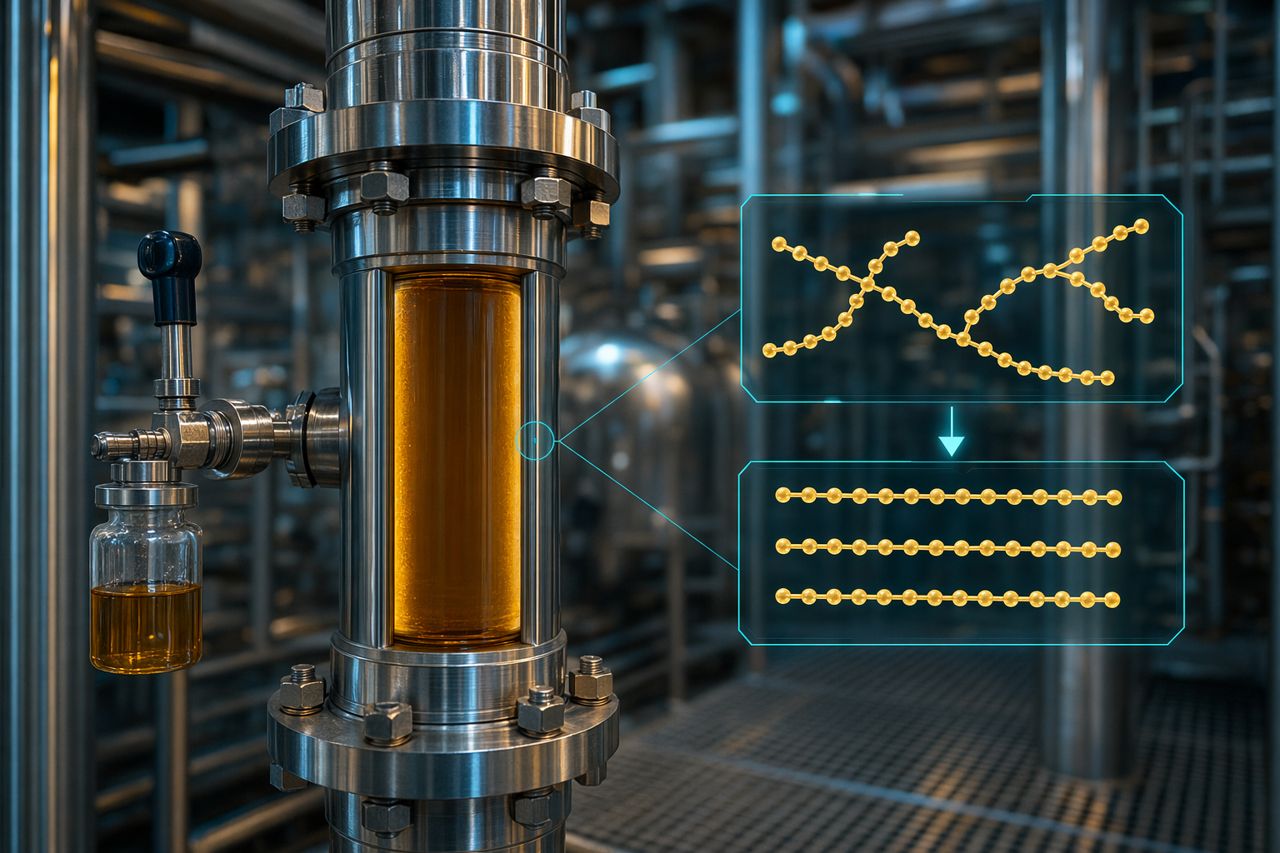
Pullulanase is a targeted debranching enzyme used to open alpha-1,6 glucosidic branch points in starch-derived substrates. For starch processors, syrup producers, brewers, distillers, and industrial formulators, that specificity translates into a practical advantage: fewer resistant branch structures, better substrate access for companion enzymes, and more complete conversion of starch into usable sugars.
Debranch Works supplies Pullulanase (Pullulan 6-alpha-glucanohydrolase) for B2B teams that need technical clarity, reliable supply conversations, and a product fit that can be evaluated against real process conditions.
What pullulanase does
Starch is not a simple straight chain. Amylopectin contains branch points that limit how efficiently alpha-amylase, glucoamylase, and related saccharification systems can access and convert the substrate. Pullulanase hydrolyzes alpha-1,6 branch linkages, simplifying the starch network and making downstream conversion more efficient.
In practical terms, pullulanase helps processors pursue:
- Higher dextrose and fermentable sugar potential
- Reduced residual limit dextrins
- Improved starch utilization from liquefied substrates
- Cleaner saccharification profiles
- More consistent syrup, brewing, or fermentation performance
- Better process efficiency when used with the right companion enzymes
Built for industrial starch conversion
Pullulanase is typically evaluated where starch conversion economics matter: glucose syrup, high-dextrose syrup, brewing adjunct conversion, grain-based distillation, and other carbohydrate processing systems.
Saccharification and syrup production
In syrup applications, pullulanase is commonly used with glucoamylase to reduce branch-related conversion limits. By debranching amylopectin fragments, it can support higher dextrose formation, improved conversion consistency, and cleaner carbohydrate profiles.
Brewing and adjunct processing
For breweries using starch-rich adjuncts, pullulanase can help improve fermentable extract by reducing non-fermentable branched dextrins. The result is better control over attenuation, extract utilization, and residual carbohydrate load.
Distilling and fuel ethanol
In grain-based fermentation, debranching can improve fermentable sugar availability and reduce carbohydrate left behind after conversion. For distillers, that can support yield protection, throughput discipline, and more complete use of raw material input.
Formulation and process development
Formulation scientists use pullulanase when branch removal is a defined performance lever. It may be evaluated in enzyme blends, starch modification systems, carbohydrate hydrolysis processes, and specialty ingredient development.
Where pullulanase creates value
Pullulanase is not a generic starch enzyme. Its value comes from precise debranching where alpha-1,6 linkages are limiting conversion.
| Buyer objective | Pullulanase contribution |
|---|---|
| Improve saccharification efficiency | Opens branch points for more complete conversion |
| Increase fermentable sugar availability | Reduces resistant branched dextrin structures |
| Improve process consistency | Helps standardize conversion behavior across starch inputs |
| Support clearer syrup targets | Reduces residual carbohydrate complexity when properly applied |
| Optimize enzyme systems | Works as a focused debranching component alongside companion enzymes |
| Protect raw material economics | Helps processors extract more value from starch feedstocks |
Technical fit: what we discuss before quoting
Pullulanase selection depends on your substrate, process sequence, and target outcome. We keep the technical discussion direct and commercially useful.
For accurate pricing and fit guidance, share:
- Substrate type: corn, wheat, cassava, potato, rice, barley, mixed grain, or other starch source
- Application: syrup, brewing, distilling, ethanol, food processing, or formulation development
- Process stage: liquefaction support, saccharification, adjunct conversion, or blend development
- Operating window: temperature, pH, contact time, and process hold conditions
- Companion enzymes: alpha-amylase, glucoamylase, beta-amylase, fungal enzymes, or custom blends
- Target outcome: dextrose profile, fermentability, viscosity reduction, residual dextrin reduction, or yield improvement
- Packaging preference: pilot, production, tote, drum, or other supply format
- Documentation needs: specification, safety, allergen, regulatory, or quality documentation requirements
Product and procurement support
Debranch Works is built for industrial buyers who need more than a product name. We support procurement, technical, and plant teams with the information required to evaluate pullulanase responsibly.
Typical support includes:
- Product format recommendations for your application
- Compatibility discussion with existing enzyme systems
- Handling and storage guidance
- Batch and packaging conversation for pilot or production requirements
- Documentation packages for internal approval workflows
- Commercial quoting based on application, volume, and supply format
Why Debranch Works
We focus on one enzyme category and one industrial problem: debranching starch efficiently. That narrow focus helps us speak clearly with processors, formulators, brewers, distillers, and sourcing teams.
You get:
- A technically grounded pullulanase conversation
- Application-specific quoting instead of generic assumptions
- Practical guidance for scale-up evaluation
- Procurement-ready communication
- A supply discussion aligned with your process reality
Request a quote
Tell us what you are converting, how the process runs, and what outcome you need. We will respond with pullulanase fit guidance, documentation availability, packaging options, and pricing direction.
Need pricing for a defined production volume? Use the form above and include expected monthly or annual demand so we can respond with a relevant commercial range.