Pullulanase for Texture and Carbohydrate Modification
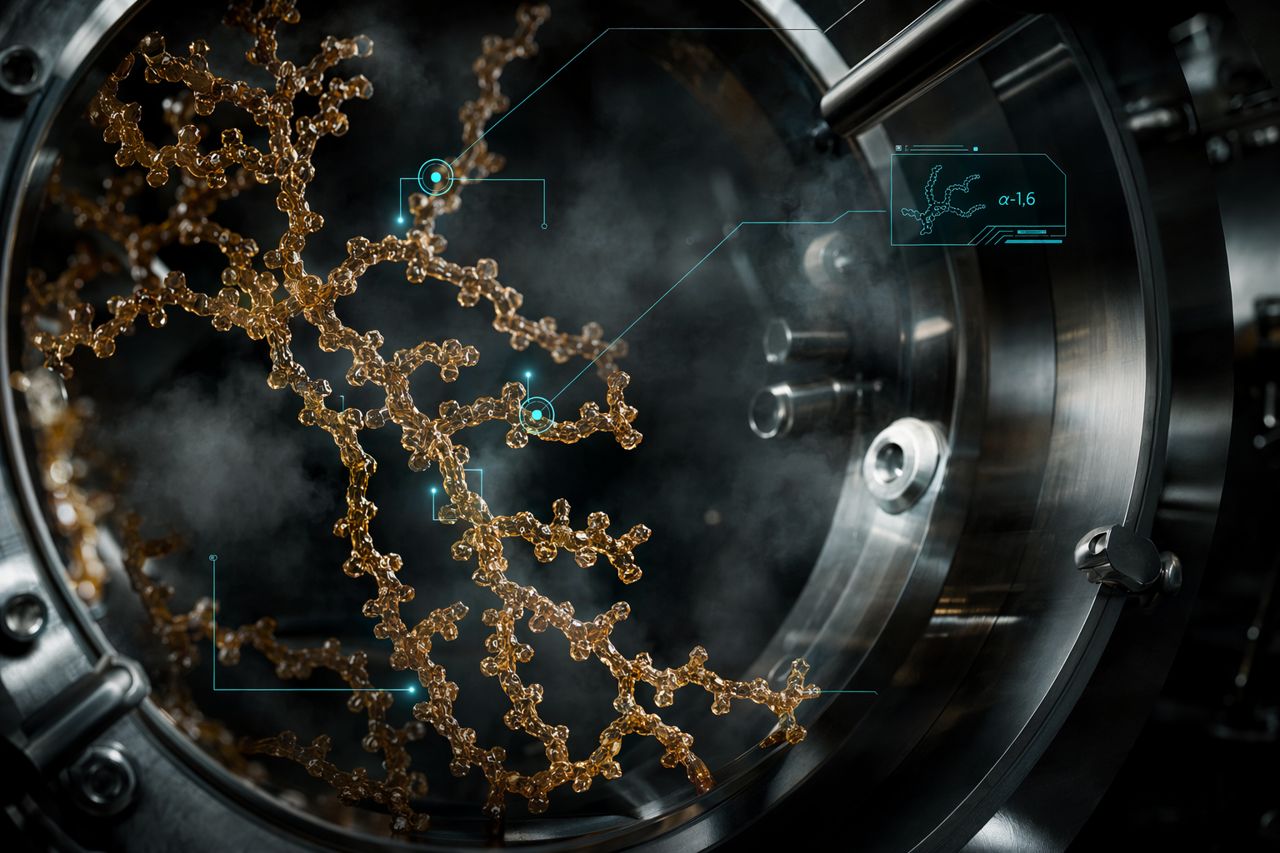
Pullulanase is a debranching enzyme used to modify the structure and process behavior of branched starch. In food processing, it targets alpha-1,6 branch points in amylopectin and related glucans, converting highly branched carbohydrate structures into more linear chains that are easier to saccharify, formulate, ferment, filter, or texturize.
For starch processors, brewers, distillers, and formulation teams, the commercial value is practical: better control over viscosity, carbohydrate profile, sweetness development, digestibility behavior, and downstream handling.

Pullulanase Enzyme Solutions supplies pullulanase in bulk to food and ingredient manufacturers, starch modifiers, syrup and sweetener producers, and the ingredient distributors and resellers who serve them. Supply is quoted per order, from trial quantities to repeat production lots.
Wholesale and bulk pullulanase for manufacturers, distributors and resellers. Every order is quoted individually. Request a quote with the application, the quantity you need and the destination country.
What pullulanase does in food systems
Starch contains branched glucose-chain architecture. Standard alpha-amylase and glucoamylase workflows can reduce chain length, but branch points can limit complete conversion or create process inefficiency. Pullulanase addresses that structural bottleneck by hydrolyzing alpha-1,6 linkages.
That debranching step can support:
- Lower residual branched dextrin content
- Improved starch utilization in syrup and fermentation workflows
- More controllable viscosity reduction
- Increased formation of linear maltodextrins and fermentable carbohydrates
- Better compatibility with downstream filtration, evaporation, blending, or drying
- More predictable texture design in selected starch-based foods
Pullulanase is not a generic thinning aid. It is a structural control tool for carbohydrate systems where branch architecture affects yield, texture, sweetness, or processability.
Primary food-processing applications
Starch syrup and sweetener production
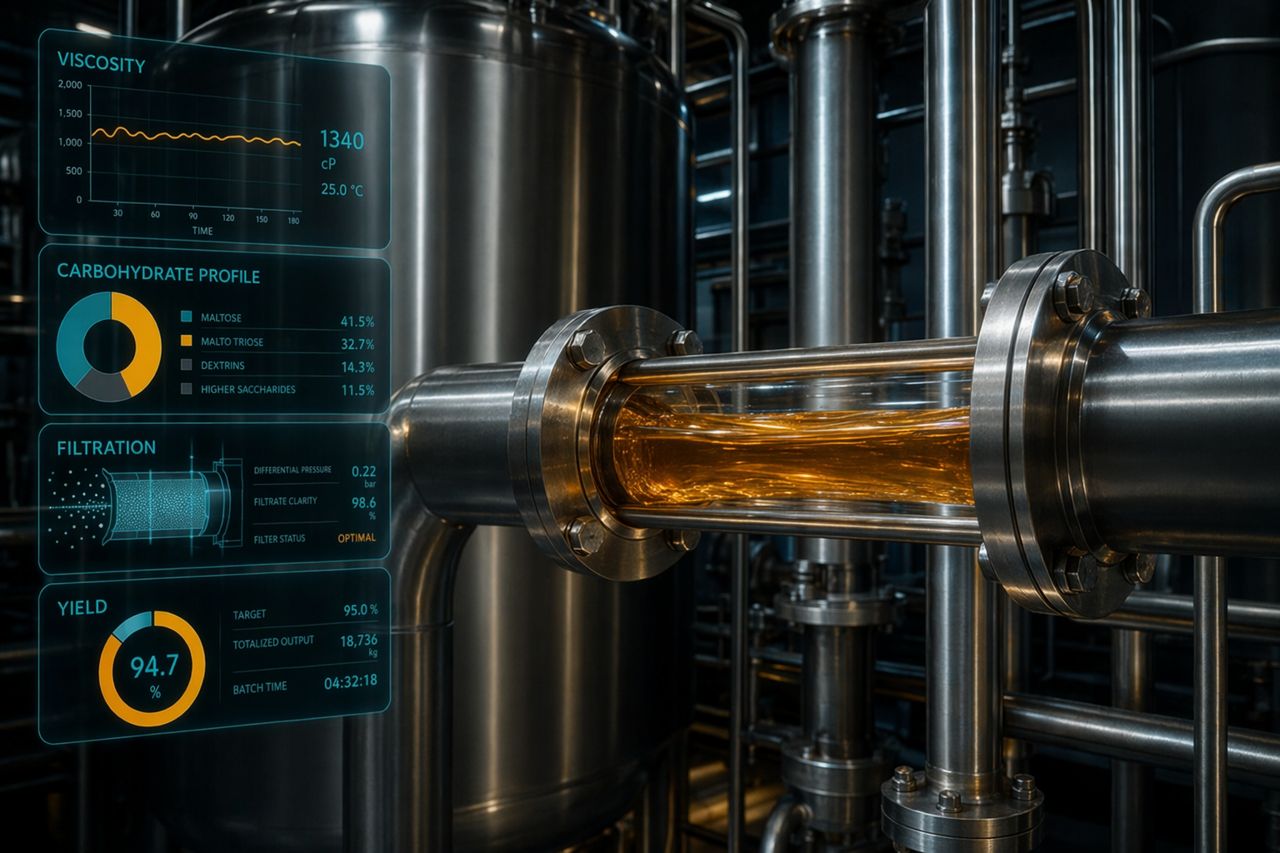
Pullulanase is commonly evaluated in starch conversion processes where debranching improves access for saccharifying enzymes. In glucose, maltose, and specialty syrup production, it helps processors move carbohydrate profiles toward tighter specifications.
Typical commercial objectives include:
- Higher conversion of branched starch fractions
- Cleaner syrup profile development
- Improved control of maltose, glucose, and dextrin distribution
- Reduced viscosity during conversion and finishing
- Better filtration and evaporation behavior
- More consistent batch-to-batch carbohydrate composition
For buyers, the decision point is not simply enzyme cost. It is total process value: yield, residence time, filtration load, evaporation efficiency, rework reduction, and specification consistency.
Brewing and distilling adjunct conversion
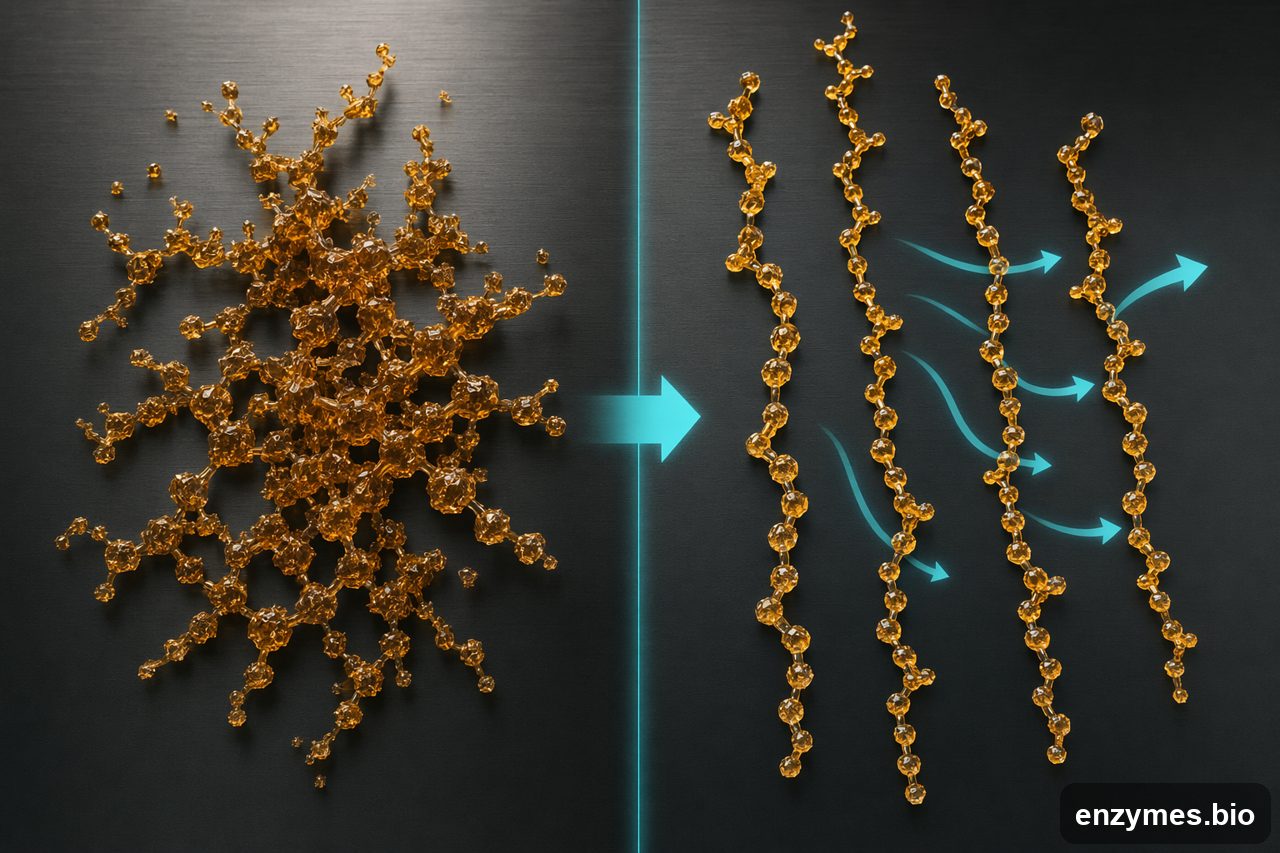
In brewing and distilling, pullulanase can support starch adjunct conversion by improving fermentable carbohydrate availability. When used with an appropriate liquefaction and saccharification system, debranching can improve the accessibility of starch-derived dextrins.
Use cases include:
- Adjunct-heavy mashes
- Cereal-based fermentation feeds
- High-gravity processes where viscosity control matters
- Distilling operations focused on starch utilization
- Process trials where residual dextrin levels affect yield or attenuation
Pullulanase is especially relevant when branch-limited dextrins remain after conventional conversion, creating a gap between theoretical and actual carbohydrate utilization.
Texture control in starch-based foods
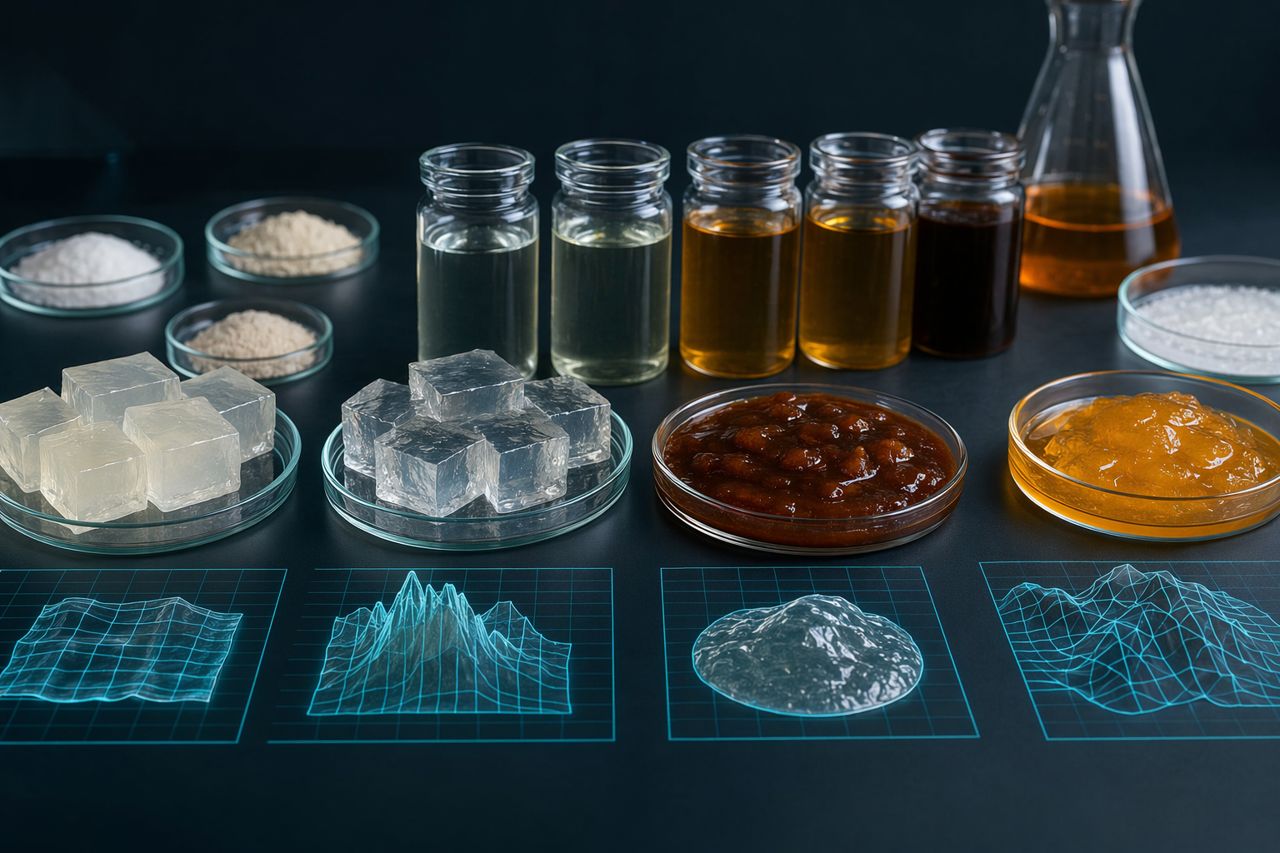
Debranching changes the chain-length distribution of starch hydrolysates and modified starch systems. That can influence gel behavior, set, mouthfeel, clarity, and short-bodied versus long-bodied texture.
Pullulanase may be evaluated in selected formulations involving:
- Starch-based fillings and sauces
- Confectionery carbohydrate systems
- Noodle, bakery, or cereal applications using enzyme-modified starch fractions
- Low-viscosity or clean-finish carbohydrate bases
- Texture systems where linear-chain content affects structure
The goal is not to force one texture outcome. The goal is to create a more controllable carbohydrate platform for formulation work.
Digestibility and carbohydrate profile design
Because pullulanase changes starch structure, it can be used in development programs focused on carbohydrate digestibility behavior. In some systems, debranching can support targeted chain distributions that are then processed further by heat treatment, drying, retrogradation control, or additional enzymatic steps.
Relevant evaluation targets may include:
- Digestibility profile screening
- Resistant or slowly digestible carbohydrate development pathways
- Maltodextrin and syrup functionality
- Caloric contribution and sweetness balancing within formulation constraints
- Label, sensory, and processing compatibility
Any digestibility-positioned application should be validated against the finished food matrix, thermal history, moisture level, and regulatory requirements in the target market.

What to evaluate during trials
A pullulanase trial should be designed around measurable processing and product outcomes, not enzyme addition alone.
Recommended evaluation points include:
- Feedstock type: corn, wheat, tapioca, potato, rice, or blended starch streams
- Existing enzyme system: liquefaction, saccharification, or mash-conversion program
- Target carbohydrate profile: glucose, maltose, maltotriose, dextrins, or specialty distribution
- Viscosity response during conversion
- Filtration rate and solids handling
- Fermentation performance where applicable
- Syrup clarity, color, and off-note control
- Finished texture, mouthfeel, set, or flow behavior
- Process economics versus current baseline
A well-run trial should compare control and pullulanase-assisted runs under commercially realistic processing conditions.
Formulation and process considerations
Pullulanase performance depends on substrate accessibility, process timing, enzyme compatibility, and thermal exposure. It is typically positioned where branch-point removal creates meaningful value before or during saccharification, fermentation preparation, or functional starch modification.
Key considerations:
- Add pullulanase where gelatinized or liquefied starch is accessible enough for debranching
- Align process timing with the rest of the enzyme system
- Confirm compatibility with pH, temperature, solids content, and residence time already used in the plant
- Evaluate whether the value target is yield, viscosity, carbohydrate profile, texture, or fermentation performance
- Protect the enzyme from process steps that can reduce functionality before it has completed its role
- Validate performance with the actual plant substrate, not only a laboratory starch model
Debranching is most effective when it is integrated into the process logic rather than added as a late corrective step.
Commercial buying criteria
For procurement and technical sourcing teams, pullulanase selection should be based on application fit and supply reliability.
Important buying criteria include:
- Fit with starch, syrup, brewing, distilling, or food formulation use case
- Consistency across production lots
- Documentation suitable for food-industry qualification
- Technical support for trial planning and interpretation
- Packaging format appropriate for plant handling
- Lead-time reliability and scalable supply
- Clear quote basis for recurring commercial purchasing
Pullulanase Enzyme Solutions supports specification discussion, sample planning, documentation review, and quote development for commercial buyers.
Typical buyer questions
Is pullulanase only for syrup production?
No. Syrup production is a major use case, but pullulanase is also relevant in brewing, distilling, starch modification, and selected food-texture applications where branch structure affects process or product performance.
Does pullulanase replace alpha-amylase or glucoamylase?
Usually not. Pullulanase complements other starch-conversion enzymes by removing branch points that can limit access or conversion efficiency. The best configuration depends on the substrate and target carbohydrate profile.
Can pullulanase help reduce viscosity?
Yes, when viscosity is driven by branched starch or dextrin structure, debranching can contribute to improved flow and processing behavior. The result should be confirmed against the full enzyme system and solids level.
Can it improve fermentation yield?
It can support better starch utilization in processes where residual branched dextrins limit fermentable sugar availability. The commercial result depends on mash composition, companion enzymes, fermentation design, and process control.
What documentation is available?
Documentation requirements vary by customer and market. Pullulanase Enzyme Solutions can discuss food-use documentation, specification needs, and qualification requirements through the site’s own quote and technical intake process.
Ready for a quote? Use the inquiry form at the foot of this page. Tell us the application, the quantity, your preferred pack and the delivery country; price, available documents and lead time are quoted per order.
Request a quote or get pricing
Use the form below to request pricing, discuss your process target, or start a pullulanase trial review. Include the application, feedstock, current enzyme system, and the business metric you want to improve.